
Chain link fencing remains one of the most practical and widely used fencing solutions across industrial, commercial, and residential sectors. Its popularity comes from its strength, affordability, visibility, and long service life. At the core of this fencing solution is the chain link fence machine, a specialized piece of equipment that manufactures uniform, durable, and customizable wire mesh fencing. This blog explores how chain link fence machines support a wide range of industrial and residential projects, highlighting their importance in modern infrastructure and housing developments.
Understanding Chain Link Fence Machines
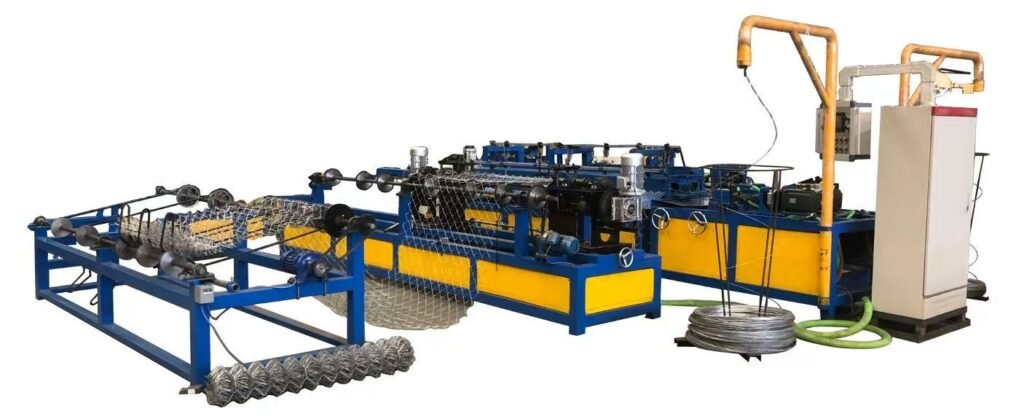
A chain link fence machine is designed to convert metal wire into interlocked, diamond-shaped mesh through a continuous weaving process. These machines can handle different wire diameters, mesh openings, and fence heights. Advanced models are often automated, offering higher production speed, precision, and consistent quality. With the ability to produce galvanized or PVC-coated fencing, chain link fence machines meet the diverse requirements of different environments.
Industrial Applications of Chain Link Fence Machines
Industrial sites require fencing that offers security, durability, and low maintenance. Chain link fence machines make it possible to manufacture fencing solutions that meet these demands efficiently.
1. Industrial Facility and Warehouse Protection
Factories, warehouses, and logistics centers rely on chain link fences to secure their premises. These fences help prevent unauthorized access while allowing clear visibility for monitoring activities. Machine-produced chain link fencing ensures uniform strength and reliable performance in high-security environments.
2. Utilities and Power Infrastructure
Chain link fencing is commonly used around electrical substations, power plants, and water treatment facilities. Fence machines enable the production of heavy-duty fencing that can support additional security features such as barbed wire or razor wire, enhancing perimeter protection.
3. Transportation and Public Infrastructure
Airports, railways, highways, and ports require large-scale fencing installations. Chain link fence machines support mass production with consistent mesh size and structural integrity, making them ideal for extensive infrastructure projects where quality and speed are critical.
4. Internal Industrial Segmentation
Within industrial complexes, chain link fences are used to separate machinery areas, storage zones, and restricted sections. Machine-made fencing provides accurate dimensions and dependable strength, helping maintain safety and operational efficiency.
Residential Applications of Chain Link Fence Machines
Residential fencing focuses on affordability, safety, and appearance. Chain link fence machines allow manufacturers to produce fencing that meets these expectations while offering customization options.
1. Residential Property Boundaries
Chain link fences are widely used to mark property lines and secure homes. Fence machines can produce lighter-gauge fencing suitable for residential use, providing durability without excessive cost.
2. Community Parks and Sports Facilities
Many residential communities use chain link fencing around parks, playgrounds, tennis courts, and sports fields. These fences ensure safety while maintaining visibility. Chain link fence machines can manufacture fencing in various heights and coatings to match aesthetic and functional requirements.
3. Pet and Animal Enclosures
Chain link fencing is ideal for pet enclosures, dog kennels, and small animal containment areas. Fence machines allow precise control over mesh size, ensuring animals remain secure while still having airflow and visibility.
4. Temporary Residential Fencing
During home construction or renovation projects, temporary fencing is often required. Chain link fence machines enable quick production of temporary fencing panels that are easy to install, remove, and reuse.
Key Benefits of Chain Link Fence Machines
- Efficient Production: High-speed manufacturing supports large and small projects alike
- Consistent Quality: Automated processes ensure uniform mesh and strong joints
- Customization: Adjustable settings allow for different wire thicknesses, mesh sizes, and fence heights
- Cost Savings: Reduced labor and material waste lower production costs
- Long-Lasting Fences: Machine-made fencing offers excellent durability and weather resistance
Conclusion
Chain link fence machines play a crucial role in delivering reliable fencing solutions for both industrial and residential projects. From securing factories and public infrastructure to protecting homes and community spaces, these machines ensure efficient production, consistent quality, and adaptable design options. As construction and infrastructure development continue to expand worldwide, chain link fence machines remain an essential tool for manufacturers and fencing contractors seeking dependable and cost-effective fencing solutions.
Frequently Asked Questions (FAQ)
1. What materials can a chain link fence machine use?
Chain link fence machines typically work with galvanized wire, PVC-coated wire, or stainless steel wire, depending on the application and environmental conditions.
2. Are chain link fence machines suitable for small-scale production?
Yes, chain link fence machines are available in manual, semi-automatic, and fully automatic models, making them suitable for both small workshops and large manufacturing facilities.
3. Can chain link fence machines produce different mesh sizes?
Most modern machines allow adjustable mesh sizes and fence heights, enabling manufacturers to meet specific industrial or residential requirements.
4. How durable is fencing made by chain link fence machines?
Machine-made chain link fencing is highly durable, especially when galvanized or PVC-coated, offering resistance to corrosion, weather, and impact.
5. Why are chain link fences preferred for industrial projects?
They provide strong security, clear visibility, low maintenance, and cost-effectiveness, making them ideal for industrial and infrastructure applications.