China has emerged as a global leader in the chain-link fence manufacturing industry—an achievement powered by rapid innovation, advanced automation, and highly efficient production systems. At the center of this transformation is the growing adoption of Cowan fence machines, known for their durability, speed, and exceptional weaving precision.
This rise in automation has reshaped the industry, enabling Chinese manufacturers to offer high-quality fencing products at competitive prices while meeting global demand.
How China Became a Global Hub for Chain-Link Fence Production
1. High-Tech Manufacturing Facilities
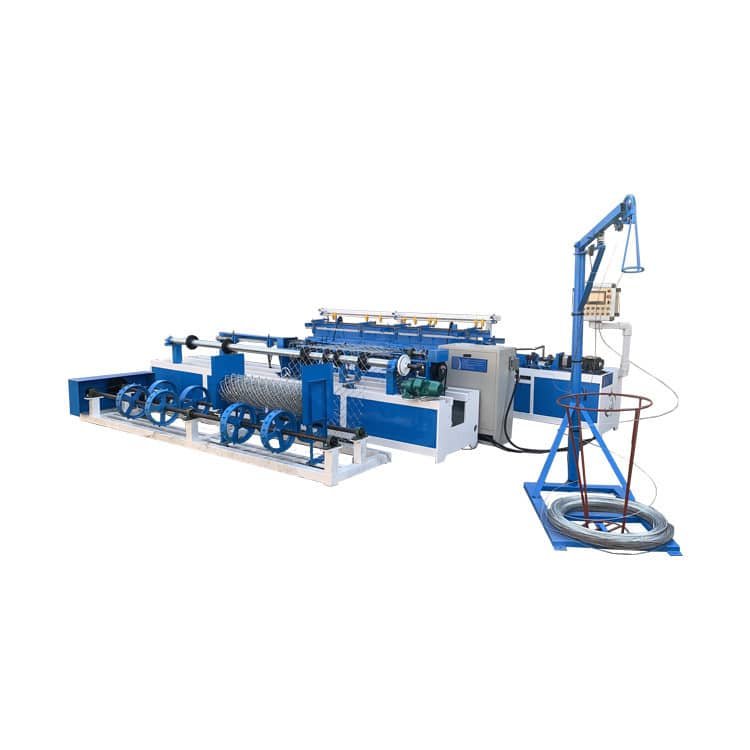
Modern Chinese factories have shifted from manual weaving methods to fully automated production lines. Cowan-style fence machines support:
- Faster output
- Consistent mesh quality
- Reduced labor costs
- Improved safety
This automation enables factories to run longer and produce fencing that meets international standards.
2. Cost-Effective Mass Production
China maintains its competitive edge through:
- Economies of scale
- Skilled labor
- Strong supply chains
- Affordable raw materials
With Cowan machines boosting efficiency, manufacturers can offer better pricing without compromising quality.
3. Global Export Leadership
China exports chain-link fencing to:
- North America
- Europe
- Africa
- Middle East
- Southeast Asia
Because Cowan fence machines increase uniformity and precision, Chinese fencing products are trusted worldwide for construction, agriculture, sports facilities, and security applications.
The Role of Cowan Fence Machines in China’s Expansion
Precision Engineering
Cowan machines are engineered to produce uniform mesh size, tight weaves, and strong galvanized or PVC-coated wire—qualities essential for durable fencing.
Automation & Speed
Key benefits include:
- Rapid weaving cycles
- Automatic cutting and twisting
- CNC control systems
- Reduced need for manual adjustments
This boosts production capacity dramatically compared to traditional machines.
Versatility in Fence Types
With Cowan machines, manufacturers can produce:
- Standard chain-link mesh
- Heavy-duty security mesh
- PVC-coated fencing
- Custom-size fencing for specialty projects
This versatility allows Chinese producers to serve a wide range of industries.
Why Global Buyers Prefer Chinese Chain-Link Fencing
✔ Competitive Pricing
✔ Consistent, reliable quality
✔ Faster turnaround times
✔ Advanced coatings (PVC, galvanized, zinc-aluminum)
✔ Customizable sizes and wire diameters
Thanks to Cowan machines’ automation, manufacturers meet large orders with ease and precision.
Looking Ahead: The Future of Fence Manufacturing in China
China is continuing to invest in:
- Fully intelligent production lines
- Energy-efficient machinery
- Eco-friendly coating technologies
- AI-driven quality monitoring
As Cowan-style technology evolves, China’s position as a top global producer of chain-link fencing will only strengthen.
Frequently Asked Questions (FAQ)
1. What is a Cowan fence machine?
A Cowan fence machine is a fully automated weaving machine used to manufacture chain-link fencing. It is known for its high speed, precision, and ability to produce uniform, durable mesh.
2. Why are Cowan machines popular in China?
They offer excellent automation, stability, and cost efficiency—allowing Chinese factories to produce large volumes of fencing while maintaining strict quality standards.
3. What materials can Cowan fence machines work with?
They can weave galvanized wire, PVC-coated wire, stainless steel wire, and other specialty metal wires.
4. Are chain-link fences made in China good quality?
Yes. Many Chinese manufacturers use advanced machinery and quality-controlled processes to meet international standards, producing fencing suitable for security, construction, and industrial use.
5. Can Chinese factories customize chain-link fence sizes?
Absolutely. Most manufacturers offer custom mesh sizes, wire diameters, coatings, and roll lengths depending on customer requirements.
6. How do Cowan machines reduce production costs?
Their automation minimizes labor, reduces material waste, and allows for continuous operation—making the manufacturing process far more efficient.