
The fence manufacturing industry continues to grow as demand rises from residential, commercial, agricultural, and industrial sectors. To remain competitive and profitable, manufacturers must focus on efficiency, consistent quality, and cost control. One of the most effective ways to achieve these goals is by investing in Cowan fence machines, a reliable solution for producing high-quality chain link fencing at scale.
This guide explores how Cowan fence machines can transform your fence production process and help you build a more profitable business.
Understanding Cowan Fence Machines
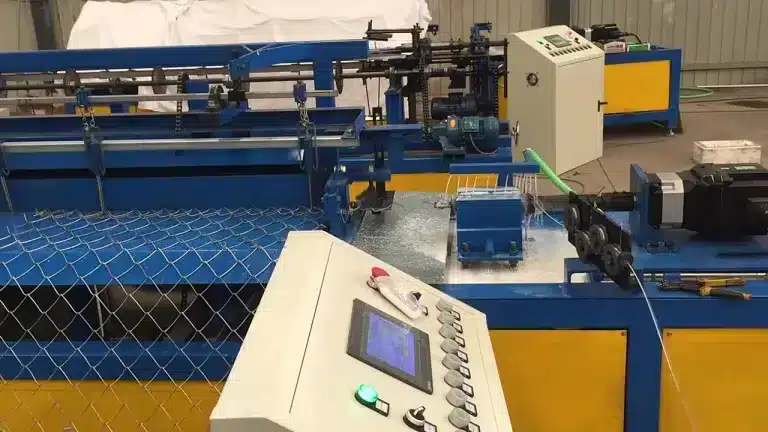
Cowan fence machines are advanced machines specifically designed for the automated production of chain link fences. They convert raw wire into uniformly woven fence mesh with precise dimensions and strong connections. By automating the weaving process, these machines eliminate many of the inefficiencies associated with manual fence production.
Cowan fence machines are widely used for manufacturing fences for:
- Residential and housing projects
- Industrial and factory premises
- Farms and agricultural land
- Sports facilities and playgrounds
- High-security boundaries
Their adaptability makes them suitable for manufacturers serving diverse customer needs.
How Cowan Fence Machines Improve Production Efficiency
Faster Output with Minimal Downtime
One of the biggest advantages of Cowan fence machines is their ability to produce fencing continuously at high speed. Traditional methods are slow and labor-intensive, limiting daily output. With a Cowan fence machine, manufacturers can significantly increase production volume while maintaining accuracy.
Higher production capacity allows businesses to:
- Fulfill large orders on time
- Handle multiple clients simultaneously
- Increase overall revenue
Lower Labor and Operating Costs
Manual fence production often requires multiple skilled workers, increasing labor expenses. Cowan fence machines streamline the process so that a single operator can manage production efficiently. This reduction in labor dependence results in substantial cost savings over time.
In addition, automated production reduces material waste, further improving cost efficiency.
Consistent Quality and Professional Finish
Quality consistency is critical for customer satisfaction and long-term business growth. Cowan fence machines ensure:
- Uniform mesh size across the entire fence roll
- Strong and secure wire weaving
- Clean, professional appearance
Consistent quality minimizes product returns and strengthens customer trust in your brand.
Flexibility to Meet Market Demands
Cowan fence machines are designed to handle a wide range of production requirements. They can accommodate different wire diameters, mesh sizes, and fence heights, allowing manufacturers to offer customized solutions for various projects.
This flexibility helps businesses:
- Expand their product range
- Serve both small and large clients
- Adapt quickly to changing market demands
Instead of purchasing multiple machines, manufacturers can rely on one versatile solution.
Long-Term Cost Benefits and Durability
Although purchasing a Cowan fence machine is an initial investment, the long-term financial benefits are substantial. These machines are built with durable components designed for long service life and stable performance.
Key long-term advantages include:
- Low maintenance requirements
- Reduced repair costs
- Reliable operation over many years
As production volume increases, the cost per meter of fencing decreases, leading to higher profit margins.
Gaining a Competitive Advantage in the Fence Industry
In today’s competitive market, customers value fast delivery, consistent quality, and fair pricing. Cowan fence machines help manufacturers meet all three expectations. Businesses that invest in modern fence production technology are better positioned to:
- Win large contracts
- Offer competitive pricing
- Build a strong reputation
This competitive edge is essential for long-term success in the fencing industry.
Choosing the Right Cowan Fence Machine for Your Business
Before purchasing a Cowan fence machine, manufacturers should consider:
- Daily and monthly production targets
- Required fence specifications
- Available factory space
- Plans for future expansion
Selecting the right machine ensures maximum efficiency and faster return on investment.
Conclusion
Profitable fence production depends on smart decisions, efficient processes, and reliable equipment. Cowan fence machines provide manufacturers with the tools they need to increase output, reduce costs, and maintain high-quality standards. Whether you are starting a new fence manufacturing business or upgrading your existing operation, investing in a Cowan fence machine is a strategic move toward sustainable growth and profitability.
Frequently Asked Questions (FAQ)
1. What types of fences can be produced using a Cowan fence machine?
Cowan fence machines are primarily used for producing chain link fences. They can manufacture fences with different mesh sizes, wire thicknesses, and heights, making them suitable for residential, industrial, agricultural, and security applications.
2. Is a Cowan fence machine suitable for small businesses?
Yes. Cowan fence machines are ideal for both small and large manufacturers. Their automation reduces labor needs and operating costs, making them a cost-effective solution even for small-scale operations.
3. How many workers are needed to operate a Cowan fence machine?
In most cases, only one trained operator is required to run the machine efficiently. This significantly lowers labor costs compared to manual production methods.
4. Are Cowan fence machines difficult to maintain?
No. These machines are designed for durability and ease of maintenance. With regular basic maintenance, they can operate reliably for many years with minimal downtime.
5. How long does it take to see a return on investment?
The return on investment depends on production volume and market demand. However, many manufacturers recover their investment quickly due to increased output, reduced labor costs, and improved efficiency.