Chain Link Fence Manufacturing Technology :: The chain link fence manufacturing industry is undergoing a major transformation. Traditionally known for mechanical and labor-intensive production methods, the sector is now embracing advanced technologies that improve efficiency, accuracy, and sustainability. As global demand for durable and cost-effective fencing continues to rise, manufacturers are turning to automation, smart systems, and digital tools to stay competitive.
This blog explores the future trends shaping chain link fence manufacturing technology and explains how these innovations are redefining production processes across the industry.
1. Advanced Automation in Fence Manufacturing
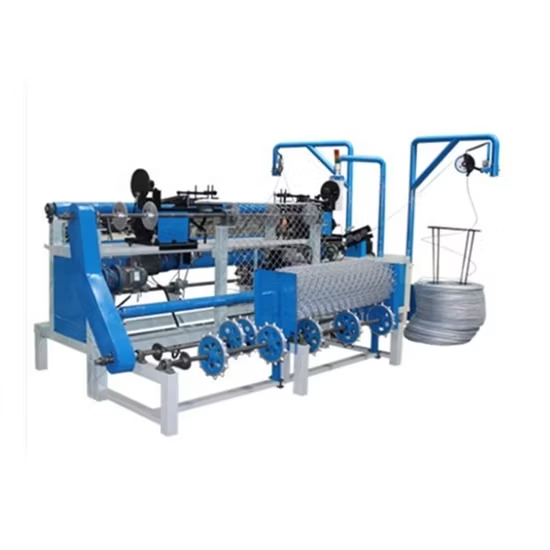
Automation is becoming the backbone of modern chain link fence production. New-generation machines are designed to handle wire feeding, weaving, cutting, and rolling with minimal human intervention.
Automated chain link fence machines ensure:
- Consistent mesh size and uniform quality
- Higher production speeds
- Reduced dependence on manual labor
As automation technology evolves, manufacturers can produce more fencing in less time while maintaining strict quality standards.
2. Smart Machines and Industrial IoT Integration
Smart manufacturing is another key trend shaping the future. Industrial Internet of Things (IIoT) technology allows chain link fence machines to communicate with sensors, software platforms, and operators in real time.
Connected machines provide:
- Live production data and performance metrics
- Early warnings for mechanical issues
- Remote monitoring and diagnostics
This level of connectivity helps manufacturers reduce downtime, improve maintenance planning, and make better operational decisions.
3. Artificial Intelligence and Intelligent Control Systems
Chain Link Fence Manufacturing Technology :: Artificial intelligence (AI) is increasingly being used to enhance machine performance and production efficiency. AI-powered control systems analyze large volumes of production data to optimize machine settings automatically.
Key applications include:
- Automatic adjustment of wire tension
- Improved mesh accuracy
- Early detection of defects
By learning from past production cycles, AI systems help manufacturers achieve higher consistency and reduce material waste.
4. Predictive Maintenance Technology(Chain Link Fence Manufacturing Technology)
Chain Link Fence Manufacturing Technology : Unexpected machine breakdowns can disrupt production and increase costs. Predictive maintenance is becoming a standard feature in advanced chain link fence manufacturing systems.
Using sensors that track vibration, temperature, and motor performance, machines can predict component wear before failure occurs. This allows maintenance teams to schedule repairs proactively, extending machine lifespan and avoiding costly downtime.
5. Energy Efficiency and Sustainable Production
Sustainability is no longer optional in modern manufacturing. Future chain link fence machines are designed with energy efficiency and environmental responsibility in mind.
Sustainable trends include:
- Energy-efficient motors and drives
- Use of recycled or eco-friendly wire materials
- Reduced scrap and optimized material usage
These practices not only reduce environmental impact but also lower operating costs over time.
6. Modular and Flexible Manufacturing Systems
Flexibility is essential for manufacturers producing different fence types, mesh sizes, or wire diameters. Modular chain link fence machines allow easy customization and upgrades without replacing the entire production line.
Benefits of modular systems:
- Faster changeovers between products
- Easy scalability for growing businesses
- Lower long-term investment costs
This adaptability helps manufacturers respond quickly to changing market demands.
7. Digital Training and Augmented Reality Support
As machines become more advanced, operator training is also evolving. Augmented reality (AR) and digital training tools are being introduced to support machine operation and maintenance.
These tools enable:
- Faster onboarding of new operators
- Visual maintenance guidance
- Reduced training errors
Digital training improves workforce efficiency and minimizes human-related production issues.
8. Data-Driven Manufacturing and Production Planning
The future of chain link fence manufacturing is heavily data-driven. Modern factories rely on production analytics to forecast demand, track efficiency, and optimize workflows.
Data-driven systems help manufacturers:
- Improve production scheduling
- Reduce inventory waste
- Align output with customer demand
This strategic use of data leads to smarter decision-making and improved profitability.
Final Thoughts(Chain Link Fence Manufacturing Technology)
The chain link fence manufacturing industry is rapidly evolving through automation, digital connectivity, artificial intelligence, and sustainable practices. Manufacturers who invest in these emerging technologies gain a strong competitive advantage by improving productivity, product quality, and operational efficiency.
As technology continues to advance, the future of chain link fence manufacturing will be defined by smarter machines, flexible systems, and data-driven operations.
Frequently Asked Questions (FAQ)
1. What is the most important future trend in chain link fence manufacturing?
Automation and smart machine integration are the most significant trends, as they directly improve production speed, accuracy, and cost efficiency.
2. How does AI improve chain link fence machines?
AI helps optimize machine settings, maintain consistent mesh quality, reduce errors, and analyze production data for better performance.
3. Are automated chain link fence machines suitable for small businesses?
Yes. Many modern machines are modular and scalable, making them suitable for both small manufacturers and large industrial operations.
4. How does predictive maintenance benefit manufacturers?
Predictive maintenance reduces unexpected breakdowns, lowers repair costs, and extends the lifespan of chain link fence machines.
5. Is sustainable manufacturing expensive to implement?
While initial investment may be higher, energy-efficient machines and reduced material waste often result in long-term cost savings.