
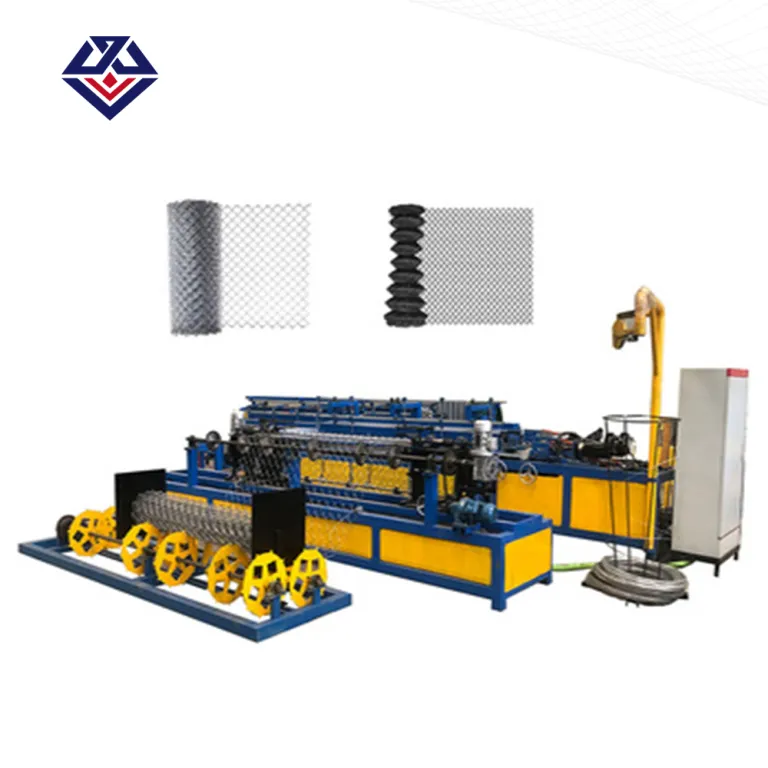
In today’s fast-growing construction and infrastructure industries, the demand for durable, cost-effective fencing solutions continues to increase. Chain link fencing is widely used for residential properties, industrial areas, sports facilities, farms, and security perimeters. To meet this growing demand efficiently, modern fence factories rely heavily on chain link fence machines.
These machines play a critical role in improving production efficiency, ensuring consistent quality, and reducing labor costs. By automating the fence manufacturing process, chain link fence machines allow manufacturers to produce large volumes of fencing quickly and reliably. As a result, they have become an essential part of modern fence manufacturing operations.
Increased Production Efficiency
One of the biggest advantages of using chain link fence machines is their ability to significantly increase production efficiency. Traditional manual fence weaving methods are slow and require a large workforce. In contrast, automated or semi-automated chain link fence machines can produce fencing continuously with minimal human intervention.
Modern machines are designed to weave wire mesh at high speeds while maintaining consistent spacing and uniform patterns. This enables factories to manufacture large quantities of fencing within a short period of time, helping them meet tight project deadlines and large customer orders.
Consistent Product Quality
Consistency is extremely important in fence manufacturing. Uneven mesh sizes or weak wire connections can compromise the strength and durability of the fence. Chain link fence machines are designed to maintain precise wire tension and consistent weaving patterns throughout the production process.
Because of this automation, every section of the fence produced has the same dimensions and structure. This ensures a high level of product quality, which is crucial for applications such as security fencing, construction sites, and public infrastructure projects.
Reduced Labor Costs
Labor costs are a significant factor in manufacturing industries. Manual fence production requires skilled workers to weave wire mesh, monitor quality, and manage production. However, chain link fence machines greatly reduce the need for manual labor.
With automated systems, one or two operators can oversee the entire production process. The machine handles most of the work, including wire feeding, weaving, and cutting. This allows fence factories to reduce labor expenses while increasing overall productivity.
Versatility in Fence Production
Modern chain link fence machines are highly versatile and capable of producing fences in various sizes, mesh patterns, and wire diameters. Manufacturers can easily adjust machine settings to produce different types of fencing depending on customer requirements.
For example, factories may produce:
- Residential chain link fences
- Security fences for industrial sites
- Agricultural fencing for farms and livestock
- Sports facility fencing
This flexibility allows manufacturers to serve multiple industries and expand their product offerings.
Improved Safety in Manufacturing
Another important benefit of chain link fence machines is improved workplace safety. Manual fence weaving can expose workers to sharp wires and repetitive physical tasks that may cause injuries over time.
Automated machines reduce direct contact with the wire during production. Operators mainly supervise the machine rather than handling the wire continuously. This helps create a safer working environment and reduces the risk of workplace accidents.
Cost-Effective Production
Although purchasing a chain link fence machine requires an initial investment, it provides long-term financial benefits. Faster production speeds, reduced labor requirements, and minimal material waste all contribute to lower manufacturing costs.
Over time, factories can recover their investment through increased production capacity and improved efficiency. This makes chain link fence machines a cost-effective solution for both small and large fence manufacturing businesses.
Supporting Industry Growth
The construction and infrastructure sectors continue to expand globally. Governments and private companies are investing in roads, railways, industrial zones, and residential developments. All of these projects require reliable fencing solutions for security and boundary protection.
Chain link fence machines enable manufacturers to keep up with this growing demand. By producing high-quality fencing at scale, these machines support the development of modern infrastructure and urban expansion.
Conclusion
Chain link fence machines have become a vital component of modern fence factories. They provide numerous advantages, including faster production speeds, consistent product quality, reduced labor costs, and improved workplace safety. Their ability to produce various types of fencing also makes them highly versatile for different industries.
As demand for fencing continues to grow worldwide, manufacturers who invest in advanced chain link fence machines can improve efficiency, expand their production capacity, and remain competitive in the market.
Frequently Asked Questions (FAQs)
1. What is a chain link fence machine?
A chain link fence machine is specialized equipment used to weave metal wire into a diamond-shaped mesh pattern, which forms chain link fencing.
2. What materials are used in chain link fence production?
Chain link fences are commonly made from galvanized steel wire, PVC-coated wire, or stainless steel wire.
3. Are chain link fence machines fully automatic?
Chain link fence machines can be manual, semi-automatic, or fully automatic. Fully automatic machines require minimal operator involvement and offer higher production speeds.
4. What industries use chain link fencing?
Chain link fences are used in many industries, including construction, agriculture, sports facilities, residential security, industrial zones, and transportation infrastructure.
5. How do chain link fence machines improve productivity?
These machines automate the wire weaving process, allowing manufacturers to produce large quantities of fencing quickly and consistently with fewer workers.
6. Is investing in a chain link fence machine profitable?
Yes. While the initial cost may be significant, the increased production speed, reduced labor costs, and improved efficiency make it a profitable investment for fence manufacturers.