When it comes to fence manufacturing, the choice of machinery can significantly impact production efficiency, quality, and cost. Two of the most popular machines in the fencing industry are the Chain Link Fence Machine and the Welded Wire Mesh Machine. While both are used to create wire fencing, they serve different purposes and operate in distinct ways. Understanding their differences can help manufacturers and business owners select the right equipment for their needs.
What Is a Chain Link Fence Machine?
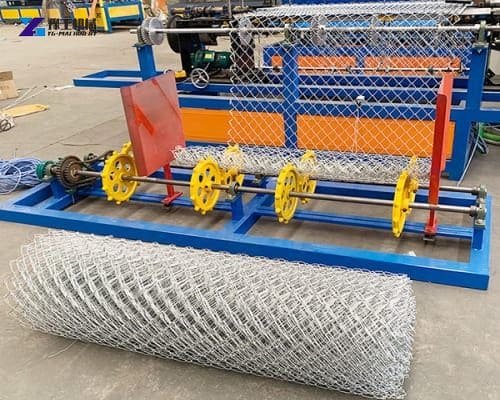
A Chain Link Fence Machine is designed to produce chain link fences by interweaving steel wires into a diamond-shaped mesh pattern. These fences are commonly used for residential, commercial, and industrial purposes because of their durability, flexibility, and relatively low cost.
Key Features:
- Produces diamond-shaped mesh automatically
- Handles various wire gauges
- Suitable for large-scale fencing production
- Can be semi-automatic or fully automatic
Chain link fences are popular for their strength and transparency, making them ideal for security fencing around schools, parks, factories, and sports grounds. The chain link fence machine automates most of the weaving process, reducing labor costs and increasing production speed.
What Is a Welded Wire Mesh Machine?
A Welded Wire Mesh Machine is used to produce welded wire panels by fusing intersecting wires together at precise points using electric resistance welding. This results in a strong, rigid, and uniform grid that is widely used in construction, concrete reinforcement, cages, and security fencing.
Key Features:
- Produces rigid, square, or rectangular mesh
- Suitable for heavy-duty applications
- Can handle various wire diameters
- Offers consistent welding quality and precision
Unlike chain link fencing, welded wire mesh provides structural strength and stability, making it suitable for applications where support and durability are critical.
Chain Link Fence Machine vs Welded Wire Mesh Machine: Key Differences
| Feature | Chain Link Fence Machine | Welded Wire Mesh Machine |
|---|---|---|
| Mesh Type | Diamond-shaped, flexible | Square or rectangular, rigid |
| Strength | Moderate, flexible | High, rigid |
| Applications | Residential, commercial, sports, security fences | Concrete reinforcement, cages, partitions, heavy-duty security |
| Production Speed | High, continuous weaving | Moderate, batch-wise welding |
| Automation | Semi-automatic or fully automatic | Often fully automatic |
| Cost | Lower initial investment | Higher initial investment |
Choosing between the two machines depends on the type of fencing required. For flexible, affordable fencing, chain link is ideal. For heavy-duty, structural purposes, welded wire mesh is a better option.
Advantages of Each Machine
Chain Link Fence Machine Advantages:
- Faster production with continuous wire feeding
- Lower cost of materials
- Flexible fencing suitable for uneven terrain
- Easy to install
Welded Wire Mesh Machine Advantages:
- Produces strong, rigid panels
- High precision and uniformity
- Suitable for structural and heavy-duty applications
- Less maintenance once installed
FAQ Section
Q1: Can the same machine produce both chain link and welded wire mesh?
No, each machine is specifically designed for its type of mesh. Chain link machines weave wires, while welded mesh machines fuse wires at intersections.
Q2: Which machine is better for large-scale fence production?
For large-scale fencing, chain link machines are typically faster and more cost-effective. Welded wire mesh machines are better for high-strength applications but may have slower production speeds.
Q3: What maintenance is required for these machines?
Both machines require regular cleaning, lubrication, and inspection of mechanical and electrical parts. Welded mesh machines may require additional attention to welding electrodes.
Q4: Can different wire gauges be used in these machines?
Yes, both machines can handle various wire diameters, but each has a maximum and minimum capacity depending on the model.
Q5: Are these machines suitable for small businesses?
Yes, there are semi-automatic and smaller-scale versions of both machines suitable for small to medium businesses.
Conclusion
Selecting between a Chain Link Fence Machine and a Welded Wire Mesh Machine depends on your business requirements, budget, and intended application. Chain link machines excel in flexibility and speed, making them ideal for general fencing. Welded wire mesh machines, on the other hand, produce stronger, rigid panels for structural and heavy-duty uses. Understanding the features, advantages, and limitations of each machine can help manufacturers make informed decisions and optimize their production lines.